Scientific Background & Mechanism
BPC-157 (Body Protection Compound-157) is a synthetic 15-amino-acid peptide commonly studied in experimental and preclinical research models. Its proposed biological activity has been investigated across several signaling systems rather than through one definitively established molecular target.
Preclinical research has examined potential interactions involving angiogenesis-related signaling, nitric-oxide pathways, inflammatory signaling, cellular migration, extracellular-matrix responses, and tissue-remodeling processes. Some experimental studies have also investigated BPC-157 in gastrointestinal, connective-tissue, vascular, and cellular stress models.
The mechanisms attributed to BPC-157 remain an active area of investigation. Findings from animal and in-vitro studies should not be interpreted as demonstrating clinical safety or therapeutic efficacy in humans.
Research Applications
Potential laboratory and preclinical research areas include:
Peptide characterization and stability studies
Cellular migration and signaling research
Angiogenesis-related pathway studies
Nitric-oxide signaling research
Inflammatory signaling models
Gastrointestinal tissue research
Fibroblast and connective-tissue models
Extracellular-matrix and tissue-remodeling research
Oxidative and cellular stress models
Analytical peptide identification and purity assessment
The appropriate experimental design, controls, analytical methods, and concentrations should be established by the laboratory's validated research protocol.
Laboratory Reconstitution Reference
For laboratory research only.
When BPC-157 requires preparation for an analytical or experimental procedure, use a laboratory-grade solvent or buffer demonstrated to be compatible with the peptide and the intended research method.
Use calibrated laboratory equipment and appropriate controlled or aseptic handling procedures where required by the experimental protocol. Research documentation should record the solvent or buffer, prepared concentration, preparation date, lot/batch number, and relevant experimental conditions.
Prepared research samples should be handled according to validated peptide-stability information and the laboratory's established procedures.
No human or veterinary dosing, injection, administration, or treatment instructions are provided.
Storage
Store BPC-157 according to the conditions specified in the applicable product specification, manufacturer documentation, and available peptide-stability information.
Protect research material from environmental conditions that may compromise peptide integrity, including inappropriate temperature, moisture, light, or repeated environmental exposure.
Prepared laboratory samples should be maintained under conditions validated for the particular solvent, concentration, analytical method, and duration of the experiment. Laboratories should document storage conditions as part of their sample-handling procedures.
Scientific References
Scientific literature relevant to a BPC-157 research guide may include peer-reviewed studies addressing:
BPC-157 structure and experimental characterization
Angiogenesis and vascular signaling
Nitric-oxide pathway interactions
Cellular migration and tissue-remodeling models
Gastrointestinal experimental models
Connective-tissue and fibroblast research
Peptide stability and analytical characterization
Because much of the published BPC-157 literature involves preclinical or animal research, references should be described according to their actual experimental context and should not be presented as evidence of established human therapeutic efficacy.
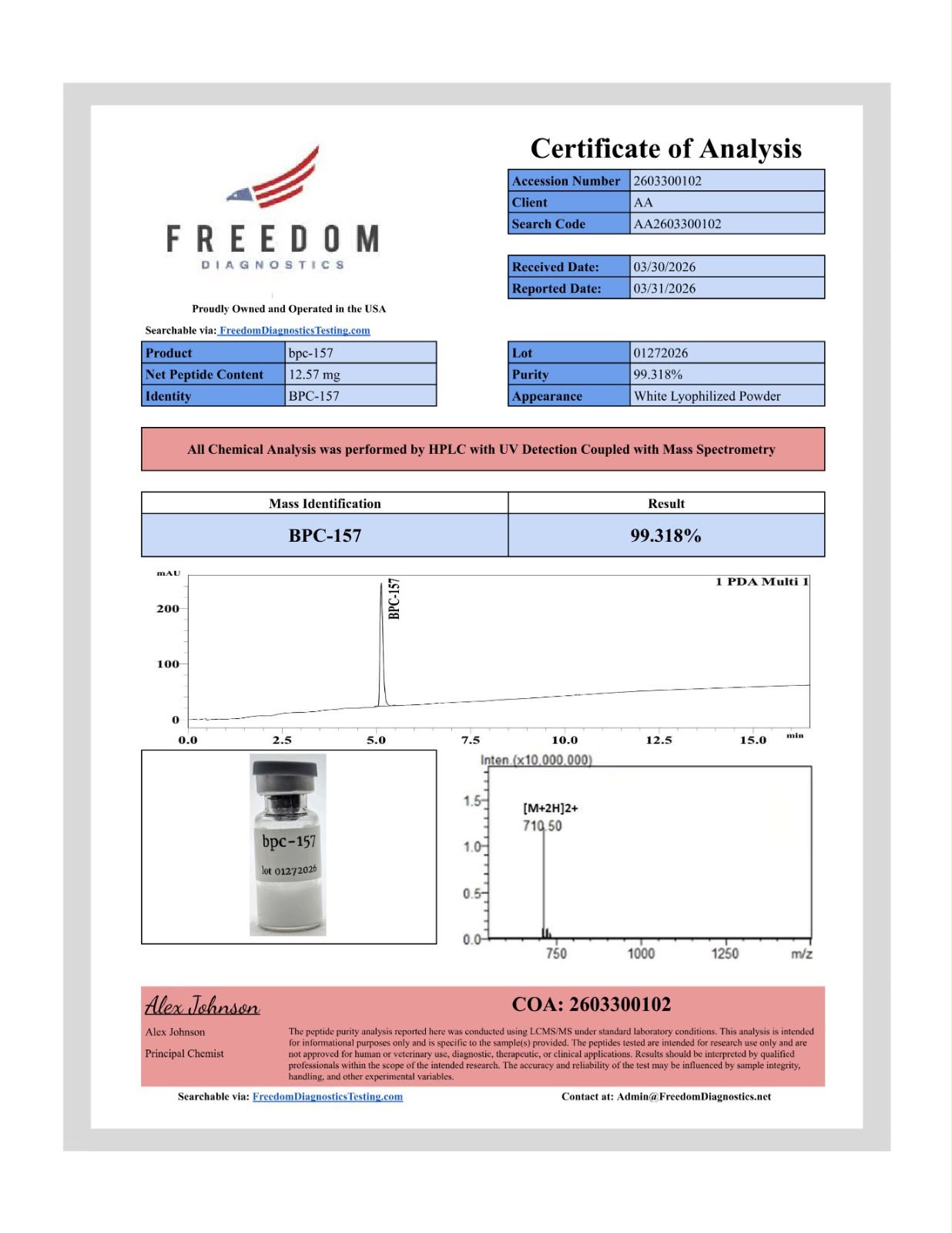
For product-specific claims such as identity, purity, peptide content, HPLC results, or mass-spectrometry confirmation, use the actual batch-specific Certificate of Analysis rather than general scientific literature.
Research Use Only — Not for Human Consumption. Not intended for medical, diagnostic, therapeutic, cosmetic, veterinary, or performance-enhancement use.
Certificate of Analysis